Medium emerges as a powerful signal detector for AI trends for 2026 that are likely to shape the technical ecosystem and the market ahead.
Tracking the evolution of Artificial Intelligence requires more than following hype, model releases, or announcements from major companies. To understand where AI is truly heading, it is necessary to look at where developers, researchers, and professionals are investing their time to learn, experiment and teach. In this sense, Medium functions as a true seismograph of the technical ecosystem, that is, an exceptionally rich source for detecting signals and patterns that tend to gain significant amplification in both the technical landscape and the market.
Why is Medium such a compelling thermometer? Because it operates as an instrument that allows us to measure two things: (1) what the technical community is actively trying to build at the moment (tutorials, guides); and (2) what is being adopted and standardized (frameworks, protocols, and “stacks” that reach consensus). By analyzing article titles, for example, it becomes possible to capture signals of intente, what people are investing time in learning, teaching and replicating. This is extremely useful for identifying trends, especially in software engineering and AI. That is exactly what was done. By analyzing 1,734 article titles published between 2024 and 2025, previously categorized and processed using topic modeling, it was possible to conduct a particularly insightful archaeology of how the discourse around AI has matured and, from that, to project trends for 2026.
The methodology used in this study followed a hybrid approach, combining semantic curation and topic modeling. Initially, Medium articles filtered by technical themes, such as AI, machine learning, neural networks, deep learning, generative AI, and software engineering, among others, were manually cataloged into thematic categories. This enabled a structured reading of the frequency and hierarchy of the most recurrent topics in each year. Next, topic modeling was applied, a technique that combines semantic embeddings with clustering to identify latent patterns in article titles. From these topics, average similarity metrics were calculated and used as a proxy for cohesion and convergence in the technical discourse. These inputs made it possible to go beyond simple theme counting, enabling a qualitative analysis of maturity, architectural convergence, and shifts in focus over time, and serving as the empirical foundation for the interpretation of the trends and projections presented.
2024 – The year of answering: how to turn LLMs into useful, reliable, and production-ready systems
In 2024, what emerges is an ecosystem in transition. The initial phase of fascination with generative AI has passed, and the focus has shifted rapidly toward a very concrete problem: how to turn LLMs into useful, reliable, and production-ready systems? This shift appears clearly in the distribution of categories. “RAG” emerges as the most frequent theme of the year, surpassing by a wide margin terms such as “LLM” or “Generative AI” (Figure 1). This data point alone is revealing. it indicates that the debate was no longer centered on the ability to generate text, but rather on how to connect models to verifiable knowledge, reduce hallucinations, and incorporate real-world context into responses.
Figure 1 shows a bar chart with the Top 10 most frequent article categories on Medium in 2024.
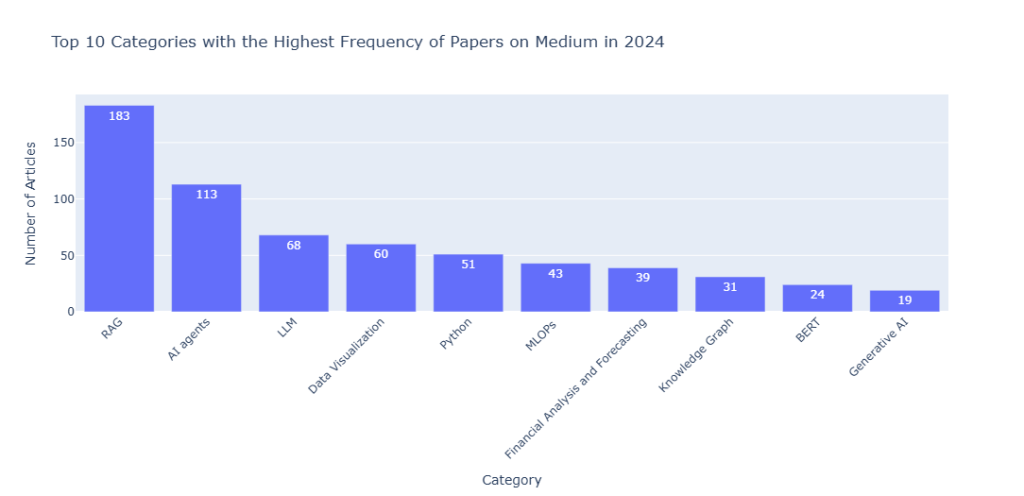
Figure 1 – Top 10 most frequent categories in 2024
The fact that RAG surpasses “Generative AI” by nearly 10× indicates that the debate is no longer about text generation, but about how to make LLMs reliable, data-connected and usable in production.
The 2024 word cloud reinforces this interpretation. The most recurrent terms clearly belong to the vocabulary of practical engineering and techniques for applying RAG: “build,” “building,” “retrieval,” “chunking,” “python,” “streamlit,” and “dashboards.” Tools such as “LangChain” and “LlamaIndex” appear prominently, not as objects of theoretical comparison, but as instruments to enable real applications. Even the topic of “agents,” which emerged with some relevance, appeared more as a promise or an emerging pattern than as a central axis of the debate. Medium in 2024 closely resembles a large collective workshop, in which the dominant question was: how do I build something useful with LLMs right now? Another interesting point is that the dominant lexicon is unmistakably engineering-oriented, with action verbs (build, create, using), tools (LangChain, LlamaIndex, Streamlit), and structures (graph, retrieval, pipeline).
Figure 2 shows the word cloud extracted from the titles of Medium articles published in 2024.
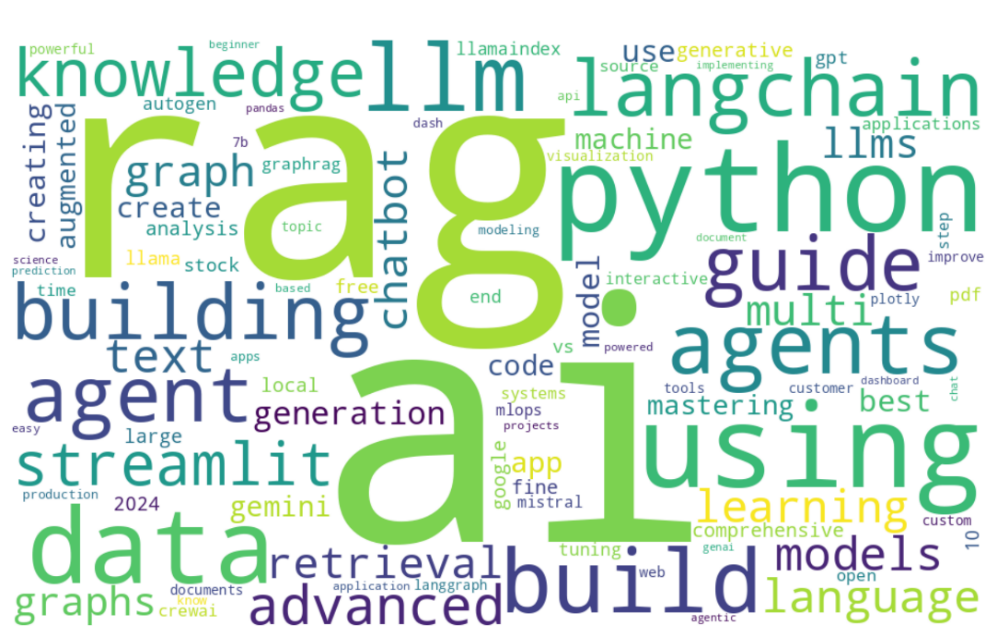
Figure 2 – 2024 word cloud
Topic modeling for 2024 confirms this impression. In a general analysis, the main clusters orbit around “RAG,” “AI agents,” “local LLMs,” “topic modeling,” “data visualization,” and “application pipelines” (Figure 3). There is thematic diversity and some degree of fragmentation, which is typical of an ecosystem in an exploratory phase.
Now, looking more closely, the bubble chart (Figure 3) shows three clearly dominant clusters: Cluster 0 – Agents / AI Agents; Cluster 1 – Chatbots, LangChain, Gemini and Cluster 2 – Advanced RAG / Chunking, Where:
- Cluster 0 – Agents / AI agents: indicating that “agentic AI” is not yet an emerging trend in that year, but the topic of “AI agents” is steadily gaining importance.
- Cluster 1 – chatbots, langChain, gemini: shows that the debate has shifted from “which is the best model?” to “how do we orchestrate models in real-world applications?”.
- Cluster 2 – advanced RAG / chunking: characterizes a more mature audience, discussing optimization, limitations, model hallucinations, and the shortcomings of traditional RAG.
Figure 3 shows the bubble chart of the 2024 topic modeling results.
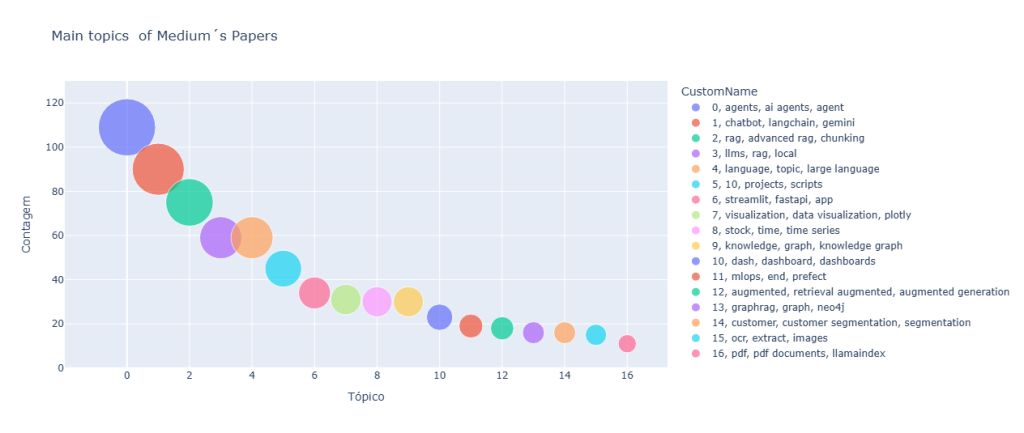
Figure 3 – Bubble chart of the 2024 data
In general terms, the average similarity chart (Figure 4) shows that, although there are strong themes, there is still no full architectural consensus. In other words, 2024 was the year in which generative AI consolidated as product engineering, but without a single, universally dominant architecture.
Taking a more detailed look, the topics with the highest average similarity are: (1) chatbots + LangChain + Gemini; (2) language, topic, LLM; (3) projects, scripts; (4) PDF, documents, LlamaIndex; (5) knowledge graphs; (6) AI agents; (7) data visualization; (8) local LLMs, RAG; (9) GraphRAG; and (10) Streamlit, FastAPI, and apps. This shows that, despite some fragmentation, the articles exhibit an implicit consensus around a common “stack,” which can be interpreted as a signal of technological consolidation.
Figure 4 shows the average similarity chart from the topic modeling of the 2024 data
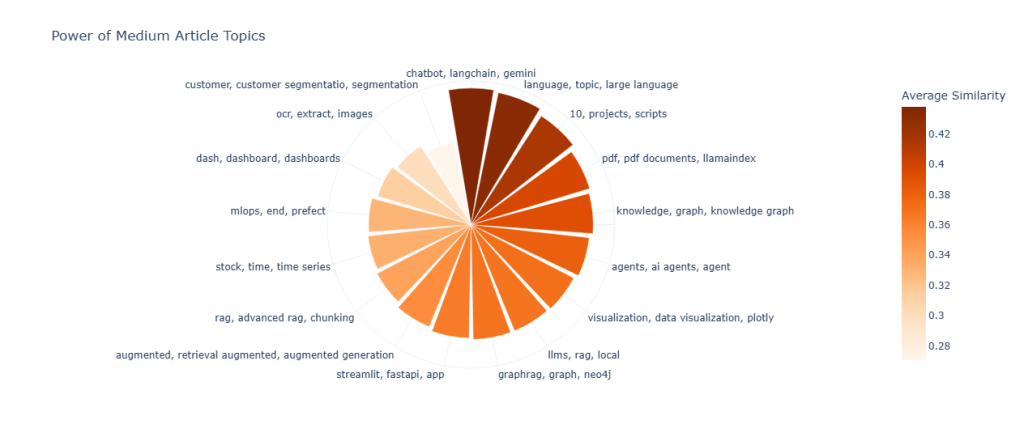
Figure 4 – Average similarity chart of the 2024 data
Based on the data, 2024 can be summarized into four major axes:
- RAG as a standard infrastructure: no longer experimental and no longer optional, RAG consolidates itself as an architectural baseline.
- Agents as a software unit: the central “object” shifts from the model to the agent.
- Frameworks outperform models: LangChain, LlamaIndex, and GraphRAG appear more frequently than the names of individual models.
- Graphs return as a semantic layer: knowledge graphs are no longer legacy systems and become a natural complement to LLMs.
In summary, 2024 was dominated by practical, architectural, and applied content, with a strong focus on how to build generative AI systems rather than merely discussing models or theory. This marks a clear inflection point compared to 2022/2023, when the focus was on “what LLMs can do.”
2025 – The year of answering: how to coordinate autonomous AI ecosystems at scale
The landscape changes quite clearly in 2025. The volume of articles increases, but what truly stands out is the reorganization of the discourse. “AI Agents” jumps decisively to first place, becoming the most frequent theme of the year by a wide margin. “RAG” remains relevant, but it no longer occupies center stage. In its place, categories such as “AI Tools,” “MCP,” and “Knowledge Graphs” emerge strongly. The very expression “Generative AI,” which still appeared in the top 10 in 2024, disappears from the ranking. This does not mean that Generative AI has lost importance; rather, it has ceased to be the organizing concept of the debate. It has become the background. In short, in 2025, the conversation is no longer about “Generative AI,” but about agents, tools, protocols, and graphs.
If 2024 can be defined as the year of built AI (build, RAG, pipelines, apps), 2025 is the year of orchestrated, connected, and protocolized AI. In 2025, Medium shifts away from discussing “how to create something with LLMs” and focuses instead on “how to coordinate systems of agents, tools, protocols, and context in production.”
Figure 5 shows the bar chart with the Top 10 most frequent article categories on Medium in 2025.
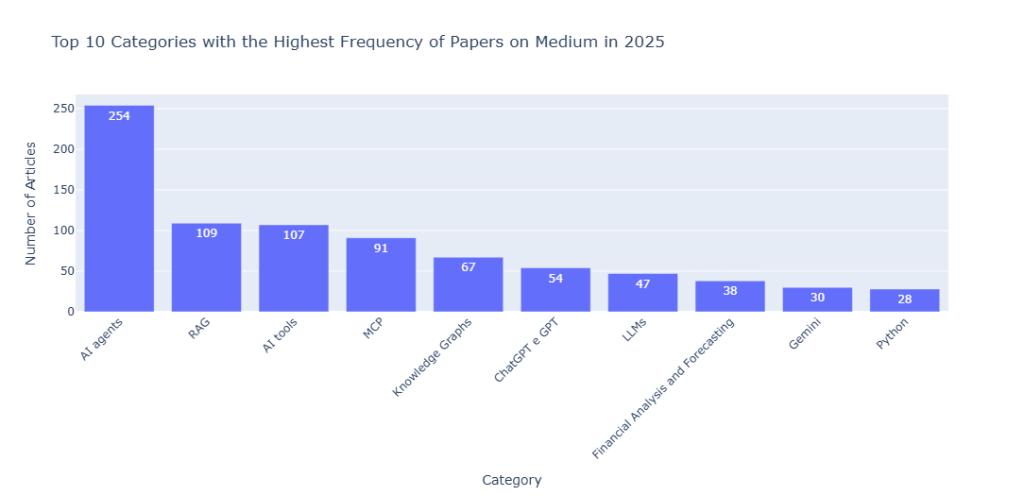
Figure 5 – Top 10 most frequent categories in 2025
The 2025 word cloud makes this transition even more evident. The dominant vocabulary now includes “AI agents,” “MCP,” “RAG,” “tools,” “agentic,” “Google,” “graph,” “knowledge,” “data,” “LLM,” “protocol,” “context,” “servers,” “workflow,” “ChatGPT,” “GPT,” “Gemini,” “LangChain,” and “LangGraph.” The language shifts from being construction-centered to coordination-centered. Instead of “how to build an app,” the conversation becomes “how to orchestrate autonomous systems that use tools, access shared context, and execute chained tasks.” This is a lexicon typical of systems architecture rather than experimentation. In 2025, the dominant vocabulary is more systemic and infrastructural, less tutorial-oriented and more architectural, hallmarks of technological maturity.
Figure 6 shows the word cloud extracted from the titles of Medium articles published in 2025.
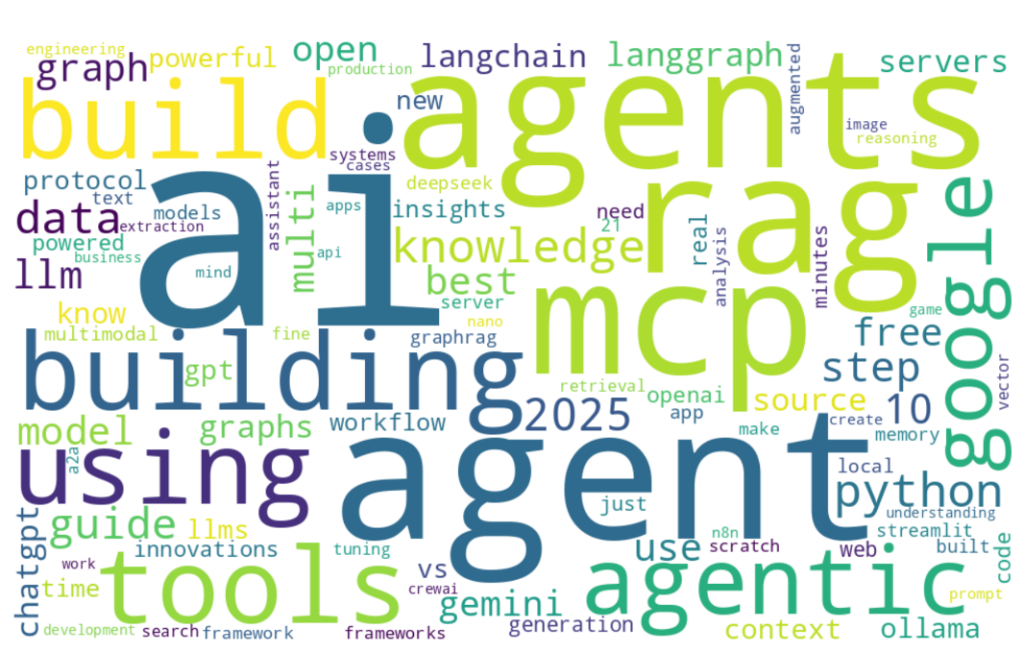
Figure 6 – 2025 word cloud
The results of topic modeling in 2025 reinforce this interpretation. In a general analysis, the largest topic by a wide margin is “AI agents and agentic systems.” This is followed by “MCP and servers,” “AI tools,” “knowledge graphs,” and “agent-oriented RAG.” These themes do not appear in isolation; on the contrary, they form a cohesive, semantically proximate block.
Now, looking more closely, the bubble chart (Figure 7) reveals something new compared to 2024. “Topic 0 – agents / agentic AI” shows absolute dominance, the largest bubble, the highest frequency, and no close competitors. This indicates that agentic AI ceases to be a trend and becomes the organizing axis of the discourse. Meanwhile, “Topics 1 to 4 – MCP, Tools, Knowledge Graphs, Agentic RAG” form a cohesive, interconnected cluster rather than isolated themes. Unlike 2024, the topics now reinforce one another. This signals architectural convergence, not dispersed experimentation.
Figure 7 shows the bubble chart of the topic modeling for the 2025 data.
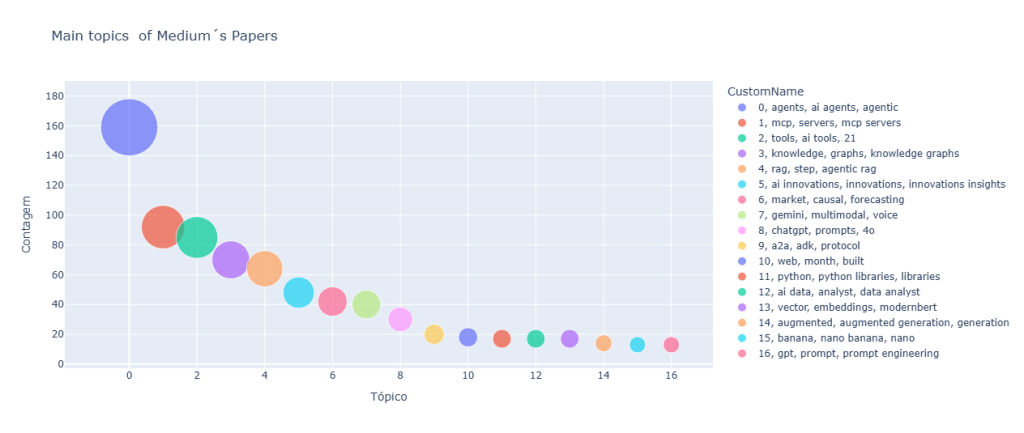
Figure 7 – Bubble chart of the 2025 data
In general terms, the average similarity chart (Figure 8) shows a significant increase in the average similarity among the dominant topics, indicating convergence. Unlike 2024, when multiple paths were being explored in parallel, 2025 reveals an ecosystem that is beginning to share a common “mental stack.”
Figure 8 shows the average similarity chart from the topic modeling of the 2024 data
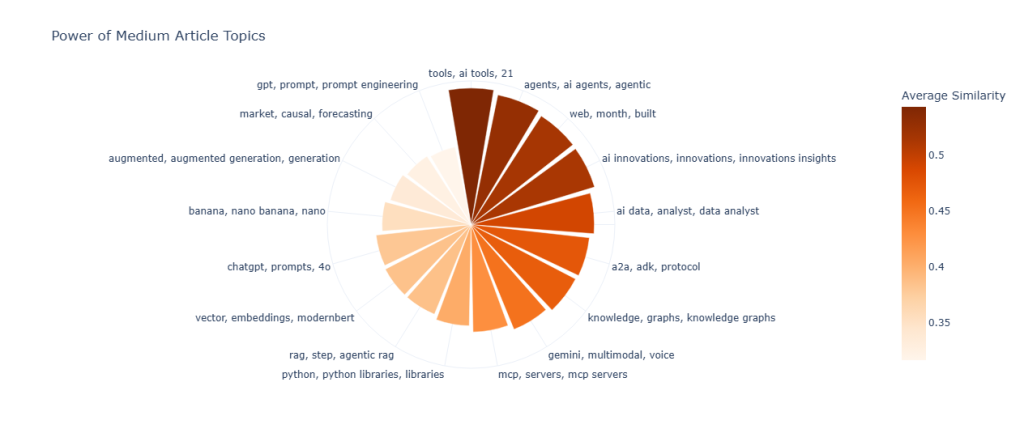
Figure 8 – Average similarity chart of the 2025 data
This difference is fundamental to understanding the phase shift. In 2024, the question was how to make LLMs reliable and usable. In 2025, the focus shifts to how to consistently coordinate ecosystems of agents, tools, and knowledge sources. AI is no longer treated as a feature within applications; it is increasingly understood as a work system, capable of executing complete and complex workflows.
Comparison of the 2024 and 2025 data
Table 1 compares the frequency of article title categories on Medium in 2024 and 2025.
| Categoria | 2024 | 2025 | Leitura |
| RAG | #1 | #2 | RAG ceases to be a “novelty” and becomes necessary infrastructure |
| AI Agents | #2 | #1 | Full consolidation of the agentic AI paradigm |
| LLM | #3 | #7 | Models lose prominence |
| Knowledge Graph | #8 | #5 | Shows a strong structural rise |
| Generative AI | #10 | — | Outside the Top 10. The term loses explanatory value |
| MCP | — | #4 | A new dominant architectural layer |
Table 1 – Comparison of the 2024 and 2025 data
What do 2024 and 2025 teach us about 2026? A grand narrative composed of three consecutive waves:
- 2024: reliability and context (RAG-first);
- 2025: execution and orchestration (agents + tools + protocols);
- 2026: operational governance and systemic efficiency (control + cost + compliance + quality).
10 trends for 2026 derived from the signals of 2024–2025
This archaeology of the two years points quite clearly to where 2026 is likely heading. When a technology reaches this level of convergence, the focus naturally shifts to second-order problems. If agents become commonplace, the differentiator is no longer building an agent, but governing networks of agents. If protocols such as MCP gain adoption, the discussion evolves toward permission control, access policies, auditing, and standardization. If tools are automatically triggered by autonomous systems, issues of security, observability, and accountability inevitably arise.
All signs suggest that 2026 will be the year in which autonomy ceases to be a novelty and becomes a baseline assumption. The debate is likely to shift toward topics such as operational governance of agents, continuous observability, security tailored to agentic systems, and economic efficiency. Infrastructure also gains prominence. As agents execute actions at scale, inference costs, latency, and data sovereignty become central concerns. Smaller models, hybrid execution across cloud and edge computing, and workload optimization are likely to take center stage.
Another movement that is clearly taking shape is the maturation of knowledge graphs. If in 2024 they still appeared as an advanced technique, and in 2025 they consolidated as semantic infrastructure, in 2026 the trend is for them to become the backbone of organizational context for AI. Graphs increasingly function as official maps of entities, relationships, rules, and constraints, providing agents with a deeper understanding of the business.
Multimodality is also likely to cease being a differentiator and become a standard. Voice, image, text, and action converge in agents capable of perceiving the environment and acting upon it. This opens space for new interfaces, especially in customer service, operations, and analytics, where interaction is no longer limited to a textual chat.
What this analysis makes clear is that 2026 is unlikely to be remembered as the year of a new revolutionary model. Just as “Generative AI” lost explanatory power in 2025, the name of the next model will likely matter less than the system into which it is embedded. The real competition shifts to who can build AI ecosystems that are safer, more efficient, more governable, and better aligned with business objectives.
Table 2 presents a summary of the trends for 2026 derived from the analysis of Medium articles from 2024 and 2025.
| # | Trend for 2026 | What Changes in Practice | Signal Observed in 2024/2025 |
| 01 | Agent governance as a priority | The differentiator is no longer creating agents, but orchestrating, supervising, and auditing networks of agents | Explosion of AI agents in 2025 and increased semantic convergence |
| 02 | Autonomy as a baseline assumption, not a differentiator | Autonomous systems cease to be experimental and become a baseline. | Agents dominate the discourse in 2025, while “Generative AI” disappears |
| 03 | Protocols as a critical layer (MCP, ACP, A2A, and similar). | Focus on permission control, standardization, and access to context | Strong emergence of MCP in 2025 as a dominant category and topic |
| 04 | Policy-governed tools | Tool use ceases to be ad hoc and begins to require catalogs, rules, and auditing | Growth of AI tools and the emergence of “servers” and “workflow” language |
| 05 | Continuous observability of agentic systems | Monitoring decisions, actions, and impacts in production becomes a requirement | Greater thematic cohesion and architectural maturity in 2025 |
| 06 | Security tailored to autonomous AI systems | The focus shifts from prompt injection to tool injection and improper actions | Increase in agents with real execution power |
| 07 | Economic efficiency as a strategic axis | Inference costs, latency, and data sovereignty move to center stage | Models lose prominence relative to orchestration |
| 08 | Smaller models and hybrid execution | Combined use of cloud, on-premises, and edge environments for specific workloads | Relative decline of LLMs as a dominant category |
| 09 | Knowledge graphs as the semantic backbone | Knowledge graphs begin to structure context, rules, and entities | Continuous growth of Knowledge Graphs in 2024 and 2025 |
| 10 | Multimodality as a standard interface | Voice, image, text, and action integrated into contextual agents | Emergence of multimodality and Gemini in 2025 |
Table 2 – Trends for 2026 based on the analysis of Medium articles
With the objective of outlining a trend landscape as close to reality as possible, in addition to the analysis of article titles from 2024 and 2025 conducted in this study, three articles by different authors on AI trends for 2026, listed below, were also analyzed. The purpose of this data triangulation was to extract trends that are common to both the study and the three articles, as well as to identify trends that were not captured by the study.
- The author Modern Data 101 wrote about “Top Data and AI Trends to Watch Out For in 2026”;
- The author Aruna Pattam wrote about “What Will Define AI in 2026? These 10 Trends”;
- The author Saurav Singh wrote about “10 Data & AI Trends That Will Redefine 2026 (Most People Aren’t Ready)”.
Table 3 presents the 15 final trends for 2026 derived from the analysis of article titles from 2024 and 2025, combined with the review of the three articles cited in the previous paragraph
| # | Trend for 2026 |
|---|---|
| 01 | AI governance, AI agents, and data as a top priority |
| 02 | Autonomy through agentic AI as a baseline assumption, not a differentiator |
| 03 | Smaller, specialized models running in hybrid environments (cloud, on-premises, and edge computing) |
| 04 | Economic efficiency as a strategic axis for cost reduction |
| 05 | Security tailored to autonomous AI becomes a critical priority |
| 06 | Protocols as a critical layer (MCP, ACP, A2A, and related), open-source AI, and model ecosystems |
| 07 | Policy-governed AI tools, with AI regulation and global standards beginning to converge |
| 08 | Continuous observability for managing agentic systems |
| 09 | Knowledge graphs as the semantic backbone and structural foundation of AI |
| 10 | Multimodality as a standard interface and a new productivity layer in human–AI interaction |
| 11 | RAG 2.0 to address the trust problem in AI |
| 12 | Intelligence engineering (context, vector data, semantics, and autonomous workflows) |
| 13 | AI-native applications replace traditional software experiences |
| 14 | AI talent will be better equipped to deploy solutions and innovate more consistently |
| 15 | Personalization becomes the customer expectation |
Table 3 – AI Trends for 2026
Finally, it is worth emphasizing that the analysis of article titles from 2024 and 2025 reveals a technical community that has matured rapidly. It moved beyond experimentation, progressed through applied engineering, and arrived at the orchestration of autonomous systems. From this point onward, the next step is inevitable, turning autonomy into reliable infrastructure. It is on this less visible, less glamorous, but far more decisive ground that 2026 is likely to be shaped.
In addition, it is important not to overlook traditional machine learning and deep learning algorithms and techniques, since not all problems can be solved solely with generative AI, LLMs, RAG, and AI agents.
References
Modern Data 101. Top Data and AI Trends to Watch Out For in 2026. Medium. 2025. Available at: <https://medium.com/@community_md101/top-data-and-ai-trends-to-watch-out-for-in-2026-a24f4a8a7cf1>. Access: 03 jan 2026.
PATTAM, Aruna. What Will Define AI in 2026? These 10 Trends. Medium. 2025. Available at: <https://arunapattam.medium.com/what-will-define-ai-in-2026-these-10-trends-ee5c05a817d0>. Access: 03 jan
2026.SINGH, Saurav. 10 Data & AI Trends That Will Redefine 2026 (Most People Aren’t Ready). Medium. 2025. Available at: <https://medium.com/predict/10-data-ai-trends-that-will-redefine-2026-8ddeed2a3663>. Access: 03 jan 2026.