


A deep analysis of Post Black Friday 2025 reveals how US consumers behaved across platforms, products and brands. Explore sentiment trends, category insights, influence patterns and the persona shaping this season. Download the full study for free.
As the Black Friday and Cyber Monday cycle ends, the conversation online shifts from expectations to results. The Post Black Friday & Cyber Monday Report analyzes how audiences reacted to brands, products and shopping experiences after the peak moment of retail. The study provides a detailed view of performance driven by cultural triggers, sentiment, platform dynamics and the new logic guiding shoppers in an increasingly competitive environment. The analysis focuses on behavior rather than predictions. It examines what truly moved the market, how consumers interpreted the season and which signals matter for brands preparing for the next cycle.
Real results: volume, reach and timing
Black Friday 2025 registered 1.9 million mentions, 739.8 thousand unique authors and 6.3 billion in reach. This growth represents a significant increase from the previous period, driven by creator-led content, brand campaigns and cultural triggers such as gaming announcements.
Several moments shaped the conversation throughout the month of November:
- Early acceleration triggered by major tech campaigns
- A spike in mid-November linked to PlayStation promotions
- A late peak driven by viral TikTok content about retail culture
- Continuous reactions to news coverage related to pricing, delays and store logistics
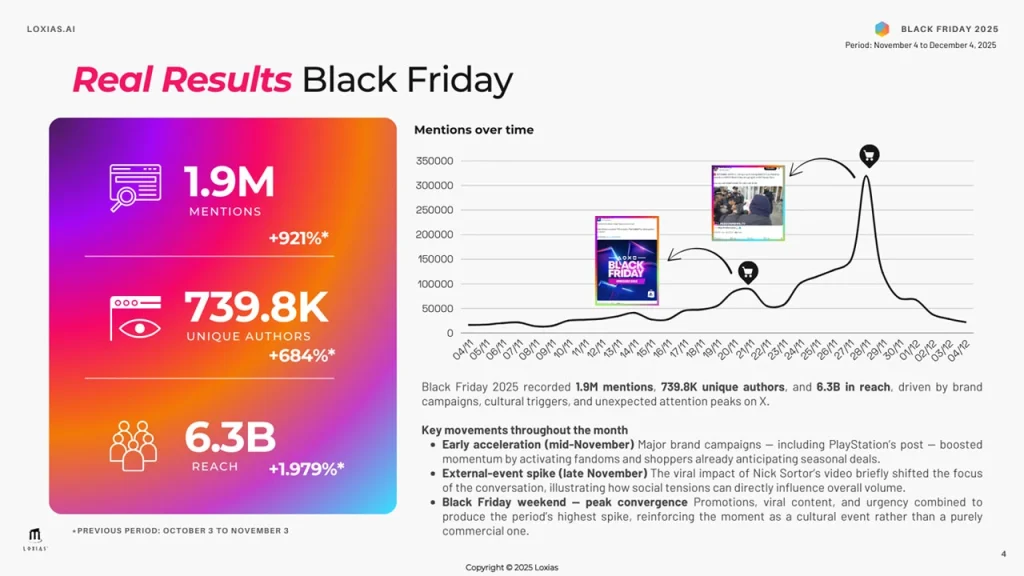
These waves illustrate how influence moved fluidly between media, creators and consumer communities.
The narrative patterns that defined the conversation
The narrative analysis shows that audiences focused on specific products and strong emotional cues. Items such as Motorola Razr, Samsung Galaxy and TESSAN chargers dominated the conversation, especially in reviews and product comparisons. The report highlights recurring themes related to logistics, delivery delays and post-purchase experiences, often tied to frustration or perceived service issues.
Positive language centered around product quality and performance, while negative sentiment often reflected delivery complications or expectations not being met. The study notes a rise in entertainment driven commentary as well, showing how Black Friday has become part of broader cultural routines.
Brand Health and the New Logic of User Behavior
The Brand Health Index closed at 5.39, rising 13% from the previous period. The report notes an increase in consumer complaints about product quality and store experiences, yet the overall sentiment remained mostly neutral.
Two major patterns emerge:
- Resilience despite decline: people voiced concerns about quality and delivery reliability, but still engaged steadily across platforms.
- Balanced and intentional engagement: news and event updates guided the tone of conversation, while positive sentiment aligned with lifestyle oriented posts.
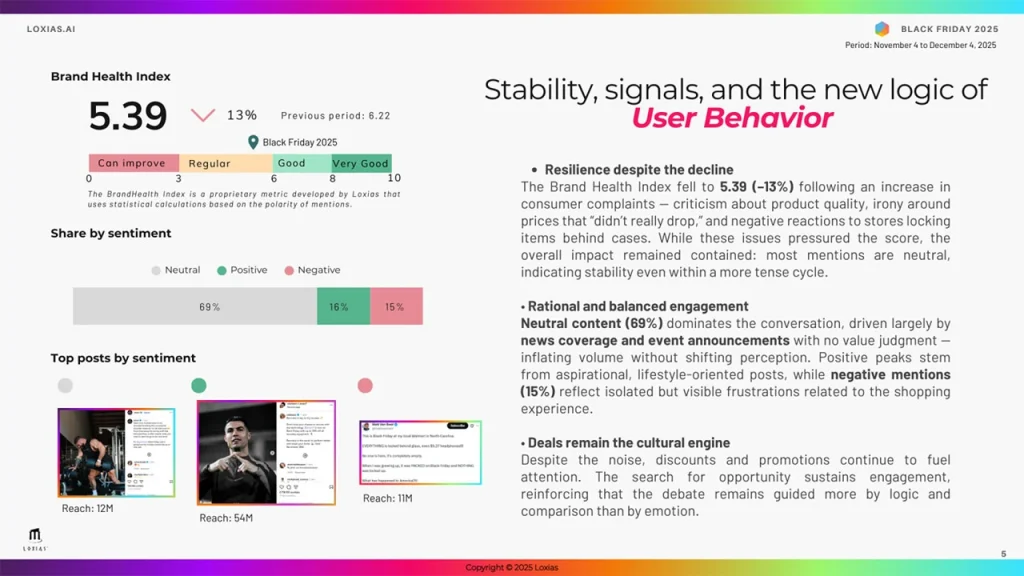
The research shows that emotional logic influenced behavior. People leaned on brands that offered clarity and consistency rather than only promotional appeal.
Platforms reveal different ydnamics
The distribution of conversations across platforms illustrates how audiences navigate information and influence:
- TikTok: 28%
- Instagram: 18.5%
- X (Twitter): 31%
- Reddit: 7%
- Facebook: 6%
TikTok and Instagram shaped culturally driven narratives, while X and Reddit amplified real-time perceptions around pricing, logistics and authenticity. This distribution shows that influence depends on format. Video and creator-led content set expectations, while text-based platforms refine them through comparisons and debates.
What people discuss when they shop
The graph analysis identifies several behavioral clusters that reveal how consumers search for value. Key pathways include:
- Conversations about offers, delivery updates and returns;
- Narratives about credit processes and follow-ups;
- Discussions focused on promotions and fast shipping;
- Content linked to navigation routines such as browsing articles and comparison sites.
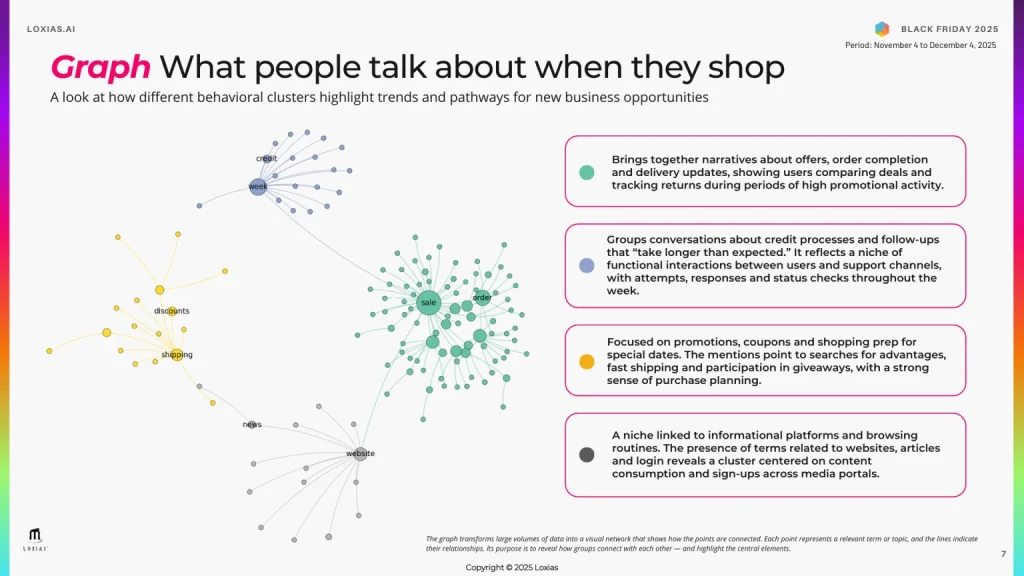
These clusters demonstrate the complexity of the purchase journey and how people rely on functional interactions throughout the week.
Black Friday’s global but US-driven impact
With 64% of volume concentrated in the United States, the event remains rooted in American culture. New York, Chicago and Los Angeles lead the conversation. The search patterns reinforce three clear priorities:
- Electronic products at 29%
- Online first shopping at 54%
- Millennials at 50% leading consumption logic
These insights reflect a consumer who values convenience, trust and familiarity.
The Black Friday shopper profile
The persona featured in the study, Jordan Mitchell, represents a strategic and tech-centered consumer. He values efficiency, practicality and a well structured shopping experience. His behavior illustrates how modern buyers navigate across Reddit and X, rely on reviews and place importance on consistency.
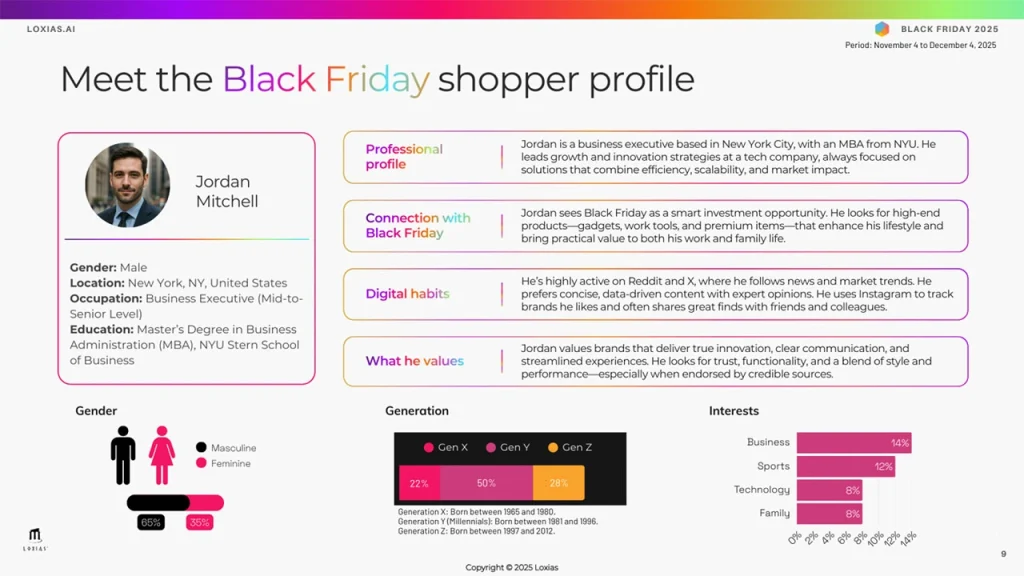
This persona is fictional, yet grounded in aggregated data about gender, age, job function, interests and digital habits. It helps translate demographic signals into a clear understanding of who drives Black Friday conversations.
Cyber Monday: a distinct moment of influence
Cyber Monday recorded 135.8 thousand mentions, 40.1 thousand unique authors and 259 million reach, reflecting a strong day of performance. Online news dominated the conversation with 58.7% of share, and social platforms amplified perceptions around deal authenticity, tension in pricing and humorous critiques of shopping culture.
Cyber Monday emerged as the moment of conversion. Searches highlighted practical intent such as “Cyber Monday deals,” showing prioritization of tangible value.
Products and brands: what led the conversation
Electronics remained the anchor of product attention with 52% of mentions. Home and Living followed at 17% and Fashion at 12%. The data indicates that consumers leaned toward replacement items, upgrades and functional purchases that improve daily routines.
Major brands also concentrated attention. Amazon led with 42%, followed by Apple at 15% and Walmart at 10%. The factors influencing leadership include convenience, reputation and scale.
Shopping methods and payment logic
Consumers continued to prioritize digital environments. Online first shopping represented 57% of mentions. E-commerce websites and marketplaces followed, reinforcing a preference for efficiency and speed. Mobile purchases remained lower at 3%.
Payment behavior showed credit and debit cards at 33.4%, digital wallets at 28.2% and PayPal at 18.4%. BNPL appeared at 10.7%, showing steady growth.
These signals demonstrate a market balancing convenience with financial planning strategies.
Loxias AI and Its Methodology
Loxias AI uses a proprietary framework that integrates narrative analysis, brand health modeling, graph intelligence and persona synthesis. These methods allow the team to go beyond mentions and understand the logic behind consumer decisions.
The report combines data from platforms such as Brandwatch, Reddit, X, TikTok and major news sources, transforming millions of mentions into strategic insight. This methodology prioritizes clarity, context and multidimensional understanding of behavior.
Final reflection
Black Friday 2025 reveals a landscape where influence depends on credibility, function and routine. Consumer behavior follows signals shaped by digital culture and practical needs. Brands that understand this logic can anticipate future movement with greater consistency.
Download the full report for free: