


Get the latest Black Friday trends for 2025 with insights on behavior, category performance and market signals that will shape strategic decisions.
Black Friday 2025 reveals a market shaped by clarity, trust and a growing demand for meaningful value. The new analysis from Loxias AI, based on activity from June to October 2025, shows that consumers do not view this shopping moment as a rush for discounts, they treat it as a structured decision process influenced by economic pressure, digital fluency and the search for reliable experiences. More than a spike in traffic, Black Friday has become a reflection of how people understand stability, relevance and everyday convenience.
Across the report, three connected forces stand out. The first is the consolidation of digital ecosystems as the main environment for purchase decisions. The second is the central role of electronics and home and living, which together represent almost 70% of all brand mentions. The third is the rise of platforms such as Reddit, TikTok and podcasts as places where influence becomes more significant than scale. These forces help explain why reach increased more than 100% while impressions dropped and why the conversation shifted toward a more analytical logic.
Category behavior defines the 2025 shopping landscape
The structure of category engagement shows this transformation clearly. Electronics account for 36% of mentions and home and living represent 34%. These two categories define the core of 2025 consumption because they connect functionality, comfort and long term value. Electronics discussions highlight products such as headphones, iPhones, tablets and premium laptops. These items dominate for practical reasons. They support daily routines and symbolize reliability rather than indulgence. Home and living shows a similar pattern. Kitchen appliances, mattresses and robot vacuums lead interest because they improve the home environment in a predictable and useful way. Together, these categories reveal that consumers want stability during an economically cautious year and rely on purchases that enhance comfort and efficiency.
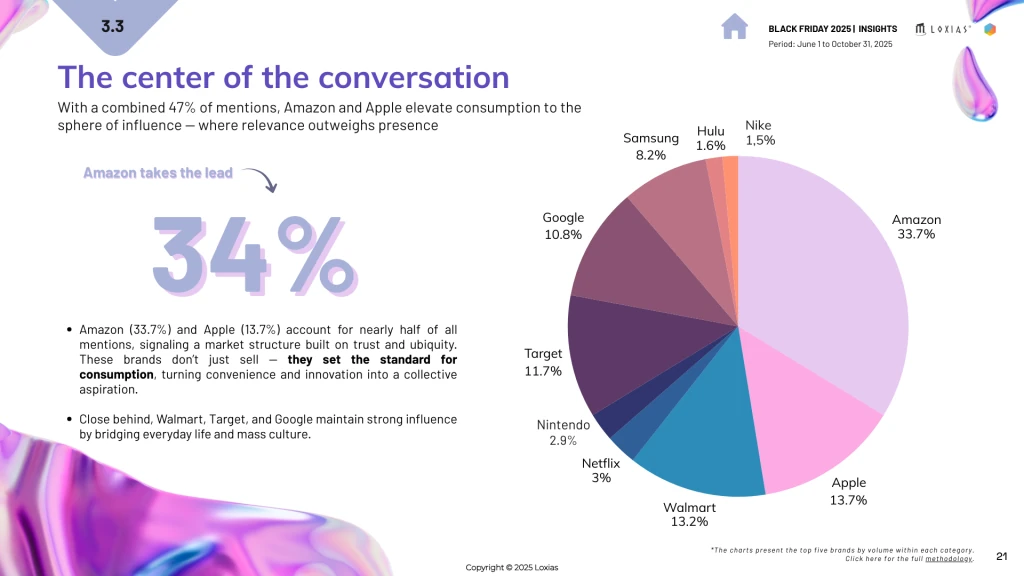
Brand visibility also follows this logic. Amazon leads with 33% of all brand mentions while Apple holds 13%. Both brands benefit from trust built over time, predictable service and the ability to merge commerce and culture. Walmart, Target and Google follow closely, each connecting everyday life with mass accessibility. This hierarchy shows how ecosystems, rather than isolated promotions, influence the way people navigate their choices.
The shopping journey reinforces this behavior, e-commerce websites and online first brands account for nearly 70% of all shopping method mentions. Consumers begin and complete most decisions in digital environments because they offer consistency and faster comparison. In payments, credit and debit cards represent 40% conversations while BNPL reaches 17% and PayPal reaches 15%.
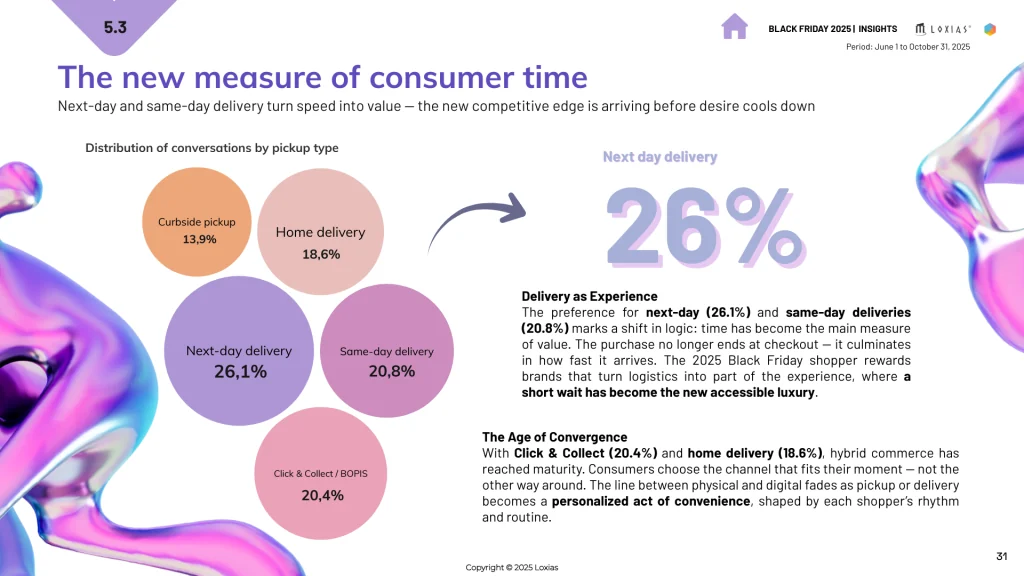
These numbers reveal a blend of traditional trust and demand for control. Delivery preferences also reflect a desire for reliable convenience. Next day delivery represents 26% and same day delivery 20% of mentions, followed by click and collect at 20% . The speed of delivery becomes part of the product experience rather than a bonus feature.
What the data shows about platforms, influence and attention
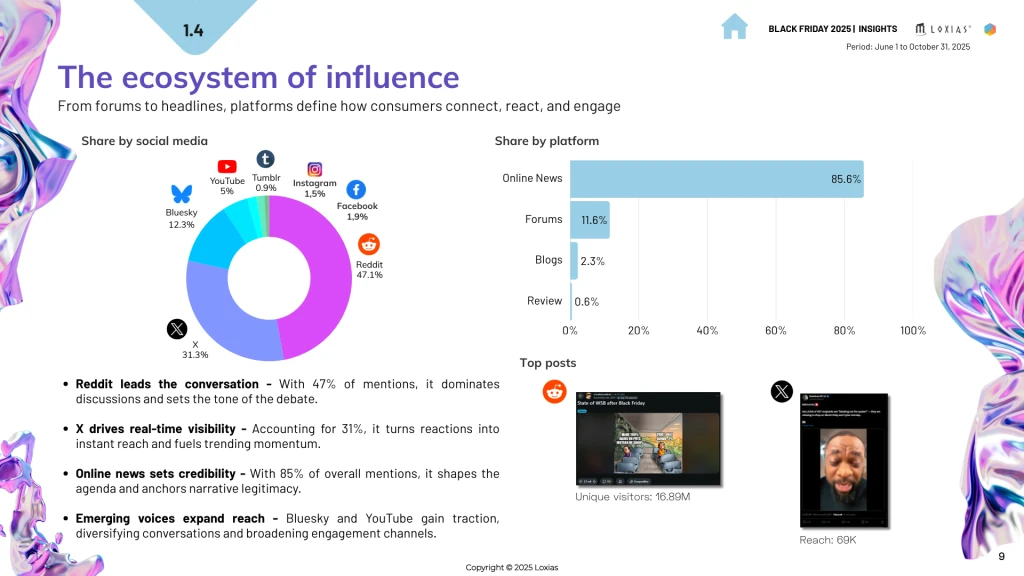
The influence layer completes the picture. Reddit drives 47% of social media conversations, acting as a deep discussion space where users compare prices, logistics and deal strategies. X contributes 31% of mentions with real time reactions and rapid circulation of alerts.
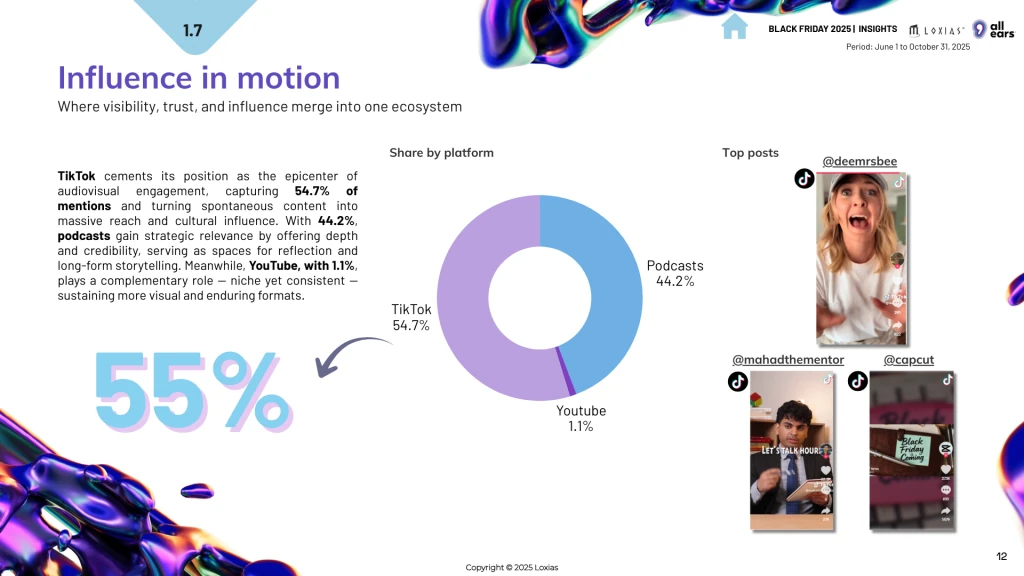
On the audiovisual side, TikTok captures 54% of mentions while podcasts represent 44%, creating a space where visibility and credibility work together to shape purchase logic. The drop of 36% in mentions within audio and video, paired with a 33% increase in reach, shows that attention has become more efficient and targeted.
The role of economic and political signals in consumer decisions
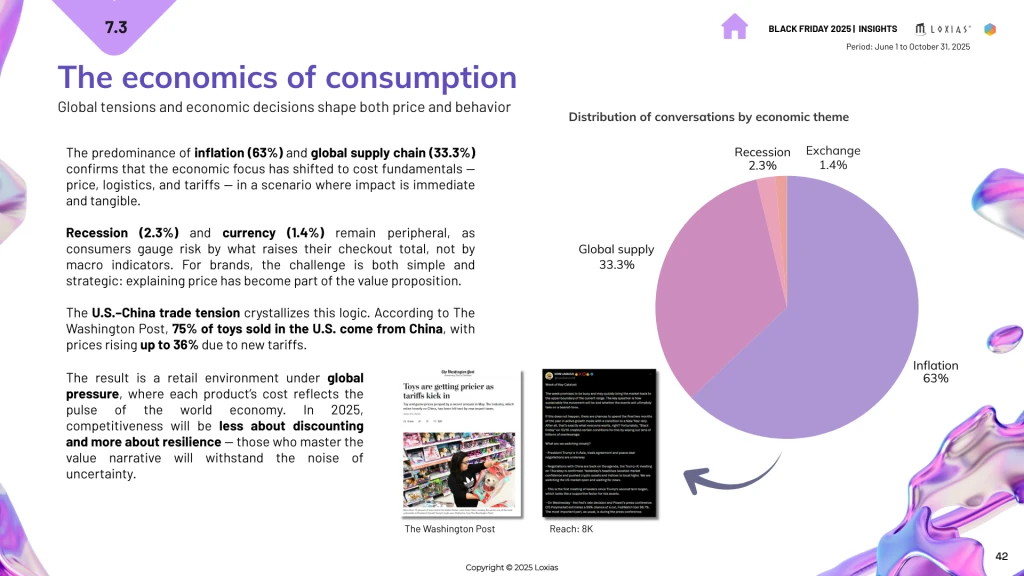
The economic environment also plays a defining role. Inflation appears in 63% of economic themed conversations and the global supply chain appears in 33%. Meanwhile, tariffs dominate political discussions. These conditions influence how consumers plan and judge value. They want clear explanations, fair pricing and confidence that brands can deliver what they promise. As a result, Black Friday becomes not only a shopping event but a measure of broader sentiment.
What emerges from the full report is a new standard for competitiveness: brands succeed when they offer clarity and integrate convenience across the entire journey. Influence stems from credibility and consistent narratives rather than volume. Consumers rely on digital spaces for verification and expect brands to match their rhythm. This creates a marketplace where purpose, trust and experience define value more than aggressive promotions.
Black Friday 2025 demonstrates that the market is entering a mature phase. Growth continues, but it is guided by relevance, precision and long term logic. For teams planning ahead, the data suggests a clear direction. Understanding consumer context, strengthening digital ecosystems and communicating with transparency are no longer differentiators. They have become essential elements of the competitive landscape.
See the full picture behind Black Friday 2025
If you want to go deeper into the signals shaping this Black Friday, we prepared a video that walks through the main insights, the data behind each category and how the conversations evolved across the season. It brings context to the numbers and shows how our team approached the analysis inside the full study.
You can watch the video here and explore the complete report with more than 50 pages of intelligence on market behavior, category performance, platforms, sentiment and the factors influencing how people decide in 2025.
???? Download the full report for free: Black Friday 2025
Watch the video: